by
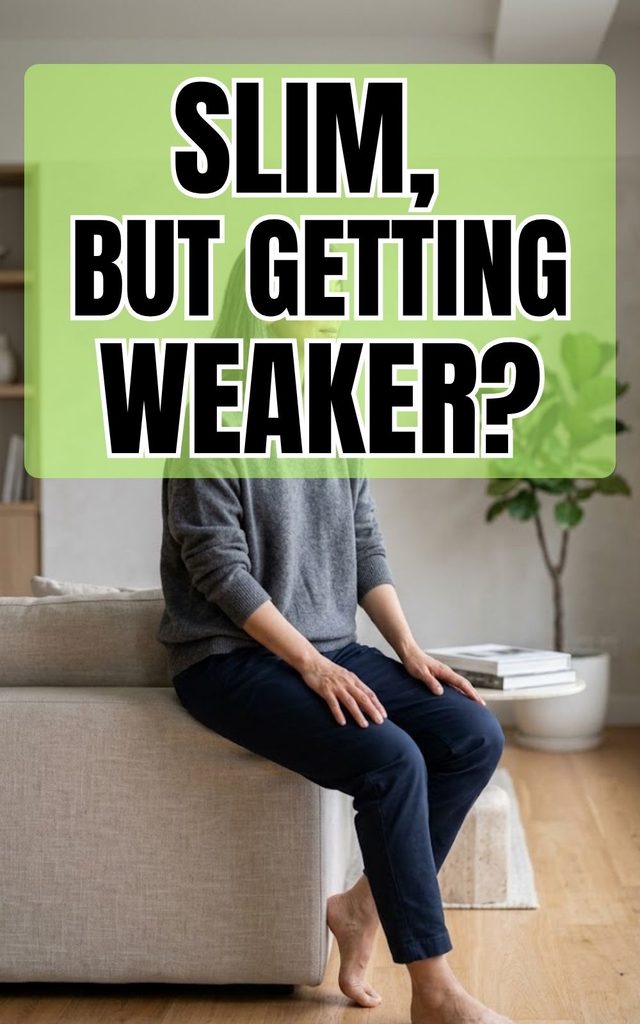
by Slim doesn’t always mean strong. A person can have a normal weight, fit into the same clothes for years, and still gradually lose muscle and gain body fat.
This is one reason the term “skinny fat” has been getting more attention in health and fitness conversations. It isn’t a medical diagnosis, but it describes a situation that many people may recognize: a relatively slim appearance combined with lower muscle mass and a higher percentage of body fat.
The confusing part is that the scale may not change very much.
That can make muscle loss surprisingly easy to overlook.
A Normal Weight Doesn’t Tell the Whole Story
For a long time, body weight and BMI have been convenient ways to talk about health. They can be useful, but they don’t tell us everything about body composition.
Two people can have the same height and the same weight while having very different amounts of muscle and body fat.
One person may have more muscle and less fat. Another may have less muscle and more fat, particularly around the waist.
The number on the scale would look almost identical.
Their bodies would not.
This is why someone can have a healthy weight and still benefit from paying attention to muscle mass, strength, physical activity, and body composition.
The goal isn’t to become as thin as possible. For many adults, particularly as they move through midlife, maintaining muscle may be much more important than losing another few pounds.
How Does Muscle Loss Happen?
Muscle doesn’t usually disappear overnight.
It can happen gradually as daily habits change.
A once-active person may become more sedentary because of work or family responsibilities. Regular exercise may become less frequent. Strength training may disappear from the routine altogether.
Diet can play a role as well.
Some people spend years trying to eat less because they are worried about gaining weight. Others simply don’t eat much protein. If the body consistently doesn’t get enough energy or protein, maintaining muscle can become more difficult.
Then there is aging.
As we get older, maintaining muscle strength and muscle mass generally requires more attention than it did when we were younger. This doesn’t mean that muscle loss is unavoidable, but it does mean that staying active becomes increasingly important.
For women over 40, this conversation can become particularly relevant. During perimenopause and menopause, changes in hormones, activity, sleep, appetite, and body composition can all occur at the same time.
That doesn’t mean every change in body shape or strength is caused by menopause. It simply means midlife can be a good time to stop looking at weight alone.
The Signs May Be Easy to Miss
One of the tricky things about low muscle mass is that it doesn’t always look dramatic.
The body may still look slim.
The scale may still show a familiar number.
But everyday movements can start to feel different.
Maybe climbing stairs takes more effort than it used to. Carrying groceries feels harder. Getting up from a low chair requires using the arms. Balance isn’t quite as good.
These changes are easy to dismiss as “just getting older.”
Sometimes they are.
But changes in muscle strength and physical function are worth noticing rather than automatically accepting them as part of aging.
And the first clue may not always be in the mirror.
Weaker, less stable knees? There may be more to it.
Knee problems can have many different causes, including previous injuries, joint changes, changes in activity, and other conditions. So knee discomfort shouldn’t automatically be blamed on low muscle strength.
At the same time, the muscles around the hips and legs play an important role in movement and stability. That makes lower-body strength an important part of the bigger picture.
Why “Skinny Fat” Is Getting More Attention
The health conversation has been changing.
For years, much of the focus was on losing weight. More recently, there has been greater interest in body composition, muscle preservation, and metabolic health.
This matters because losing weight and improving body composition aren’t necessarily the same thing.
A person can lose weight without preserving all of their muscle. On the other hand, someone who stays around the same weight may gradually become stronger and healthier by gaining muscle while maintaining or reducing excess body fat.
This is one reason the idea behind skinny fat is worth understanding, even if the term itself isn’t medically precise.
It shifts the question from:
“How much do I weigh?”
to:
“What is my body made of, and what can it do?”
That is a much more useful question for long-term health.
What Can Help Maintain Muscle?
The good news is that protecting muscle doesn’t require a complicated fitness routine.
Resistance training is one of the most effective ways to give muscles a reason to stay strong. This can include weights, resistance bands, machines, or simple bodyweight exercises.
For someone just starting, even basic movements such as sit-to-stands, wall push-ups, bridges, step-ups, or other appropriately modified exercises can be useful.
Walking is still important too.
Regular walking supports general physical activity, but adding some form of resistance exercise gives the muscles a different kind of challenge.
Food matters as well.
Adequate protein intake is important for maintaining muscle, particularly when combined with resistance training. This doesn’t mean everyone needs a high-protein diet. It means avoiding chronically eating too little and making sure meals provide enough protein to support the body’s needs.
Sleep and recovery deserve attention too.
Muscle doesn’t become stronger simply because it is exercised. The body also needs enough time, energy, and nutrients to recover.
Slim Doesn’t Always Mean Strong
Being slim or having a normal weight isn’t a problem.
The problem is assuming that body size tells the entire story.
Slim doesn’t always mean strong, and normal weight doesn’t always mean ideal body composition.
As we get older, muscle mass, muscle strength, physical activity, protein intake, and body composition can become just as important to think about as the number on the scale.
There is no need to become obsessed with body fat or chase a smaller body.
Instead, it may be worth asking a different question:
Is the body staying strong enough to support everyday life?
That is a goal that has little to do with being thin—and a lot to do with staying capable, active, and independent as the years go by.