by
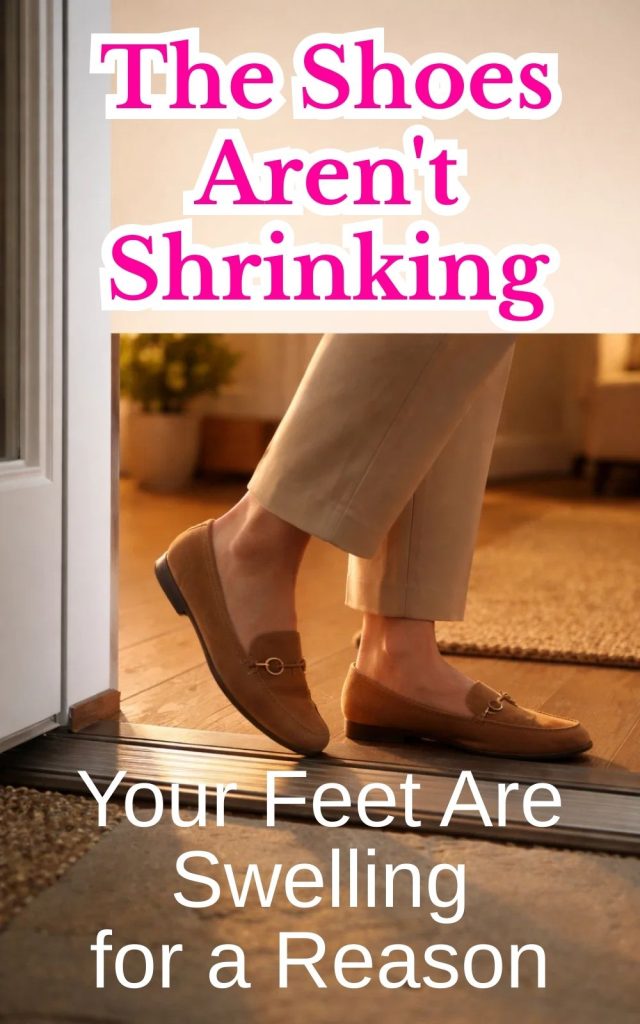
by I’ve tried it a few times—after a busy day, finally getting home in the evening, I kick off my shoes… only to wonder, why do they feel so tight? Did someone soak them in water without telling me? I even checked if I’d accidentally grabbed my partner’s smaller pair. But no—the shoes are mine, and they haven’t shrunk.
Here’s what’s actually happening: your shoes aren’t getting smaller. Your feet are swelling, and they’re trying to tell you something important about your health.
Why Your Feet Are Swelling (And It’s Not Random)
There are real, identifiable reasons why your feet puff up by the end of the day:
1. Fluid retention / Water retention – When you stand or sit for long periods, gravity pulls fluid down to your feet and ankles. Add too much salt to your diet, and your body holds onto even more water, making the swelling worse.
2. Poor circulation – If blood isn’t flowing efficiently back up from your legs to your heart, it pools in your lower extremities. This is especially common if you sit cross-legged, wear tight clothing, or rarely move throughout the day.
3. Medical conditions – Persistent swelling can signal underlying issues like arthritis, heart problems, kidney dysfunction, or venous insufficiency. If your feet swell regularly without obvious cause, it’s worth seeing a doctor.
4. Lifestyle factors – High heels force your feet into unnatural positions. Tight shoes restrict circulation. Lack of movement means your “muscle pump” (which helps push blood back up your legs) isn’t activated. All of these contribute to swelling.
Don’t ignore swollen feet. They’re not just uncomfortable—they’re a health signal. Over time, chronic swelling can affect your joints, limit mobility, and reduce your quality of life.
7 Simple Ways to Keep Your Feet Happy (And Your Shoes Fitting)
1. Elevate your feet – When sitting, prop your feet up on a pillow or ottoman. Getting them above heart level helps fluid drain back toward your core. Even 15 minutes can make a noticeable difference.
2. Move regularly – Set a timer every hour. Stand up, walk around, or do simple ankle circles and toe points. These small movements activate the muscles that pump blood back up your legs.
3. Stay hydrated – It sounds counterintuitive, but drinking more water actually helps prevent fluid retention. When you’re dehydrated, your body hoards water, leading to swelling. Keep a water bottle nearby and sip throughout the day.
4. Watch your salt intake – Processed foods, restaurant meals, and salty snacks all contribute to water retention. Cut back on added salt, and your body will naturally release excess fluid. Check nutrition labels—you’d be surprised how much sodium hides in “healthy” foods.
5. Wear comfortable shoes – Choose breathable materials, proper arch support, and a roomy toe box. Your shoes should feel good from morning to night, not just when you first put them on. If they’re tight by midday, they’re not the right fit.
6. Foot massage / rolling ball – Use a massage ball or frozen water bottle under your foot. Roll it from heel to toe, applying gentle pressure. This stimulates blood flow, releases tension, and reduces swelling. Do it while watching TV or reading—it takes almost no extra time.
7. Soak your feet in warm water – Fill a basin with warm (not hot) water and soak your feet for 10–20 minutes. The warmth relaxes tight muscles and improves circulation. Add a tablespoon of sea salt or a few drops of essential oil (lavender, peppermint, or eucalyptus work well) to enhance the effect. Even 10–15 minutes of a warm foot soak after a long day can make your shoes feel roomy again.
The Simple Evening Ritual That Actually Works
Imagine coming home after a hectic day, your feet aching and swollen. You’re exhausted, and all you want is relief.
Here’s what you do: grab a basin or bucket—anything big enough to fit both feet comfortably. Fill it with warm water. Not scalding hot, just warm enough that when you dip your hand in, it feels soothing and relaxing, like a comfortable bath.
If you have Epsom salt at home, toss in a small handful. If you have essential oils—lavender, peppermint, eucalyptus—add a few drops. But honestly? Even plain warm water works perfectly fine. The key is the warmth, not fancy ingredients.
Now sit down somewhere comfortable. Lower your feet into the water and just… let them sit there. For 15 to 20 minutes.
What happens next is simple but powerful: the warm water makes your blood vessels open up wider. Blood flows more easily through your feet and legs. All that trapped fluid that’s been pooling in your feet all day? It finally starts draining back up where it belongs. At the same time, the warmth loosens up all those tight, tired muscles in your feet—the ones that have been working hard or crammed into shoes for hours.
You’ll actually feel the difference. That tight, puffy sensation starts melting away. Your feet feel lighter. Less achy. More like normal feet again.
The best part? You can do this while watching TV, scrolling your phone, or reading a book. It doesn’t require extra time—it’s just 15 minutes you’d spend sitting anyway, except now your feet are getting the care they need.
It’s simple. It’s relaxing. And it’s surprisingly effective. By the time you’re done, your shoes will feel roomy again—not because they magically stretched, but because your feet are back to their proper size.
Your Feet Are Talking—Listen to Them
Next time your shoes feel tight, remember—it’s not them, it’s you. Take a few minutes to care for your feet, enjoy a warm soak, and step back into comfort. Your feet carry you through life; they deserve a little attention. Give them that, and they’ll return the favor by fitting into your favorite shoes again.